

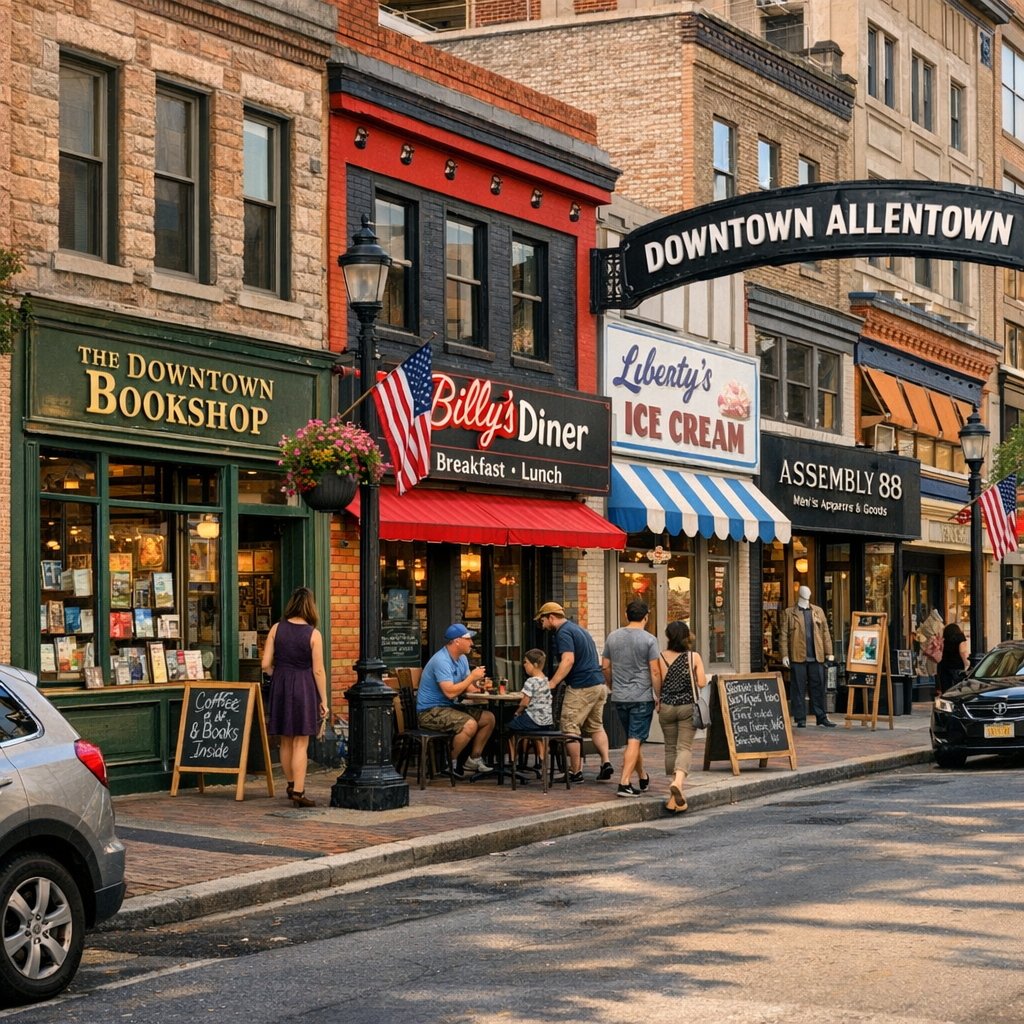
There’s a quiet transformation underway across Allentown that touches Main Street shops, the city’s neighborhoods, and the very promise of work. Between bold new plans, targeted investment, and grassroots business support, the local economy is shifting—not just growing, but aiming to grow with equity.
A Blueprint for Allentown’s Economic Future
The City’s longtime vision plan, Vision 2030, emphasizes supporting small businesses at all stages—startup, growth, expansion—by ensuring access to appropriate spaces, promoting public markets and pop-ups, and encouraging policies that help entrepreneurs scale without overly risky upfront costs.
Lifting Neighborhoods: Allentown Works & the Recompete Plan
Allentown Works—launched after the city won a significant federal Recompete grant—is targeting neighborhoods like Franklin Park, the 1st and 6th Wards, and Center City. Its core objectives include closing the city’s prime-age employment gap (currently about double in those areas compared to the city overall), expanding affordable childcare, improving transportation, and building career pathways in healthcare and manufacturing industries.
Financing and Real Estate Tools for Local Businesses
Between City revolving loan programs, the Enterprise Zone loan fund, and generous tools offered through AEDC, local businesses can now more accessibly finance equipment purchases, real estate acquisition, and operational growth. The Allentown Economic Development Corporation also rehabilitates underutilized industrial sites—providing space for manufacturing startups, co-working, and mixed-use projects.
Redevelopment Incentives & The Neighborhood Improvement Zone
The Neighborhood Improvement Zone—a special taxing district in Allentown—has been pivotal in encouraging investment in downtown and riverfront areas. Over $1 billion in redevelopment has flowed in through its incentives and financing structuring. It paves the way for more mixed-use commercial and residential development, and signals the city’s commitment to revitalized public places.
Challenges that Still Need Tackling
- The employment gap in certain neighborhoods remains high, with per-capita incomes well below city averages.
- Access to flexible spaces—whether for food innovation, arts, or retail experimentation—continues to be limited, especially for smaller, owner-operator businesses.
- Some transportation and childcare constraints still limit the ability of residents to take full advantage of new job opportunities.
How Local Actors Can Plug In and Grow Together
For entrepreneurs: investigate financing options through the City’s Business Development Office or AEDC early, and consider partnerships that can help mitigate space or cost burdens.
For residents seeking opportunity: programs like Allentown Works offer training, job placement support, and pathways into growing industries—don’t hesitate to reach out.
For local policy advocates: ensuring that zoning, public markets, and pop-ups remain accessible will be key to maintaining entrepreneurship culture—and making economic growth inclusive.
Allentown is setting up the scaffolding for long-term economic change—one that stretches beyond downtown skylines into neighborhoods, small businesses, and people whose voices deserve to be part of the story.