

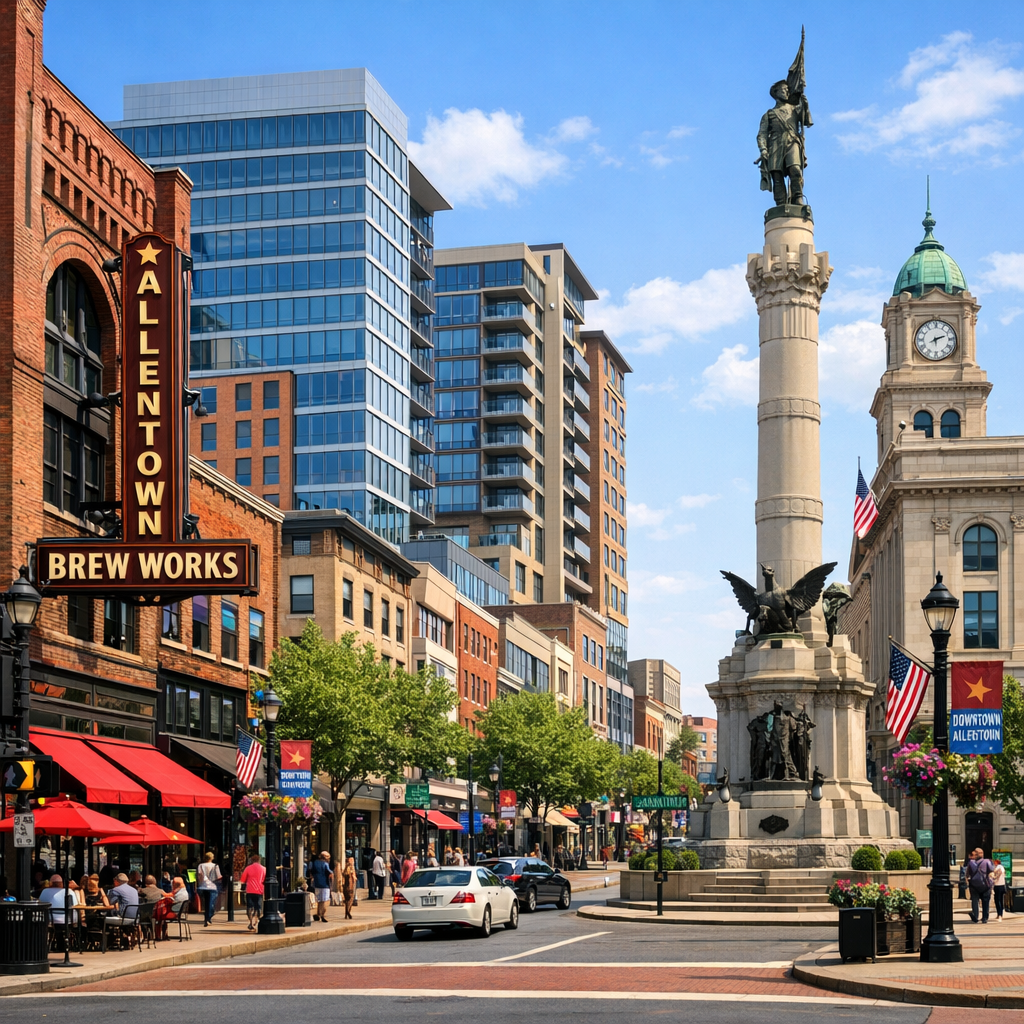
Allentown, Pennsylvania, once emblematic of industrial decline, has emerged as a beacon of urban revitalization and economic growth. This transformation offers valuable insights for cities across the nation grappling with similar challenges.
Historical Context and Economic Challenges
Historically, Allentown thrived as a manufacturing hub. However, the late 20th century saw a downturn, with factory closures leading to economic stagnation and population decline. The city’s resilience, however, set the stage for a remarkable turnaround.
Strategic Initiatives and Revitalization Efforts
In response to economic challenges, Allentown implemented several strategic initiatives:
- Neighborhood Improvement Zone (NIZ): Established in 2009, the NIZ allowed developers to utilize state and local tax revenues to fund construction projects within designated areas. This initiative spurred over $1.2 billion in development, including office spaces, residential units, and entertainment venues.
- Infrastructure and Cultural Investments: The city invested in key infrastructure projects, such as the PPL Center, a 10,500-capacity arena that hosts sports and entertainment events. Additionally, cultural institutions like the Allentown Art Museum and the Civic Theatre received support, enhancing the city’s cultural landscape.
- Economic Diversification: Efforts to diversify the economy attracted businesses in sectors like healthcare, technology, and logistics, reducing reliance on traditional manufacturing and creating a more resilient economic base.
National Recognition and Implications
Allentown’s revitalization has garnered national attention. The New York Times highlighted the city’s transformation, noting its appeal to those seeking an affordable lifestyle within proximity to major metropolitan areas.
Furthermore, the city’s strategic location has positioned it as a logistics and e-commerce hub, with access to a significant portion of the U.S. population within a day’s drive.
Lessons for National Application
Allentown’s experience offers several lessons for other cities:
- Public-Private Partnerships: Collaborative efforts between government entities and private developers can drive substantial urban renewal.
- Economic Diversification: Reducing dependence on a single industry can enhance economic resilience.
- Community Engagement: Involving residents in planning and development ensures that revitalization efforts meet the needs of the community.
As cities nationwide seek to rejuvenate their economies and urban spaces, Allentown stands as a testament to the potential of strategic planning, investment, and community collaboration.